

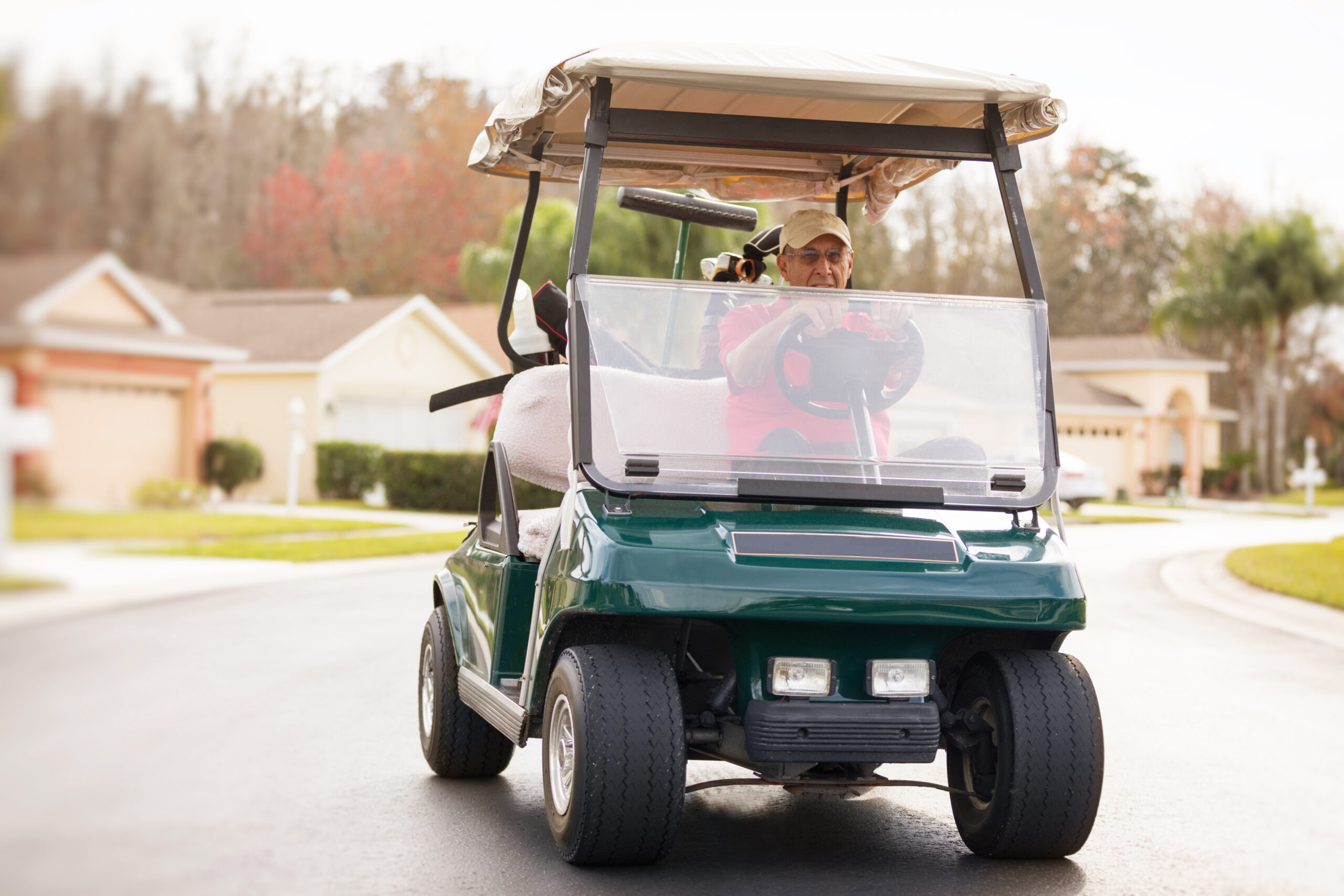
Florida’s streets have transformed into a parade of alternative vehicles. Golf carts zip through retirement communities, electric scooters line city sidewalks, and e-bikes have become a common sight on bike paths statewide. While these micro-mobility options offer convenience and eco-friendly transportation, many Floridians remain unaware of the complex legal framework governing their use.
At The Wiseman Law Firm, Attorney Simon Wiseman has spent more than 25 years handling traffic violations and vehicle-related cases throughout Orlando. As a former prosecutor who has tried over a hundred non-jury and jury trials, he understands how seemingly minor infractions can escalate into serious legal matters. If you’re cruising down the road in a golf cart, riding an e-bike, or scooting through your neighborhood, you need to know where Florida law draws the line.
Golf Cart Laws in Florida
Golf carts have become a staple in many Florida communities, but they’re not simply miniature cars with relaxed rules. Florida law defines a golf cart as a motor vehicle designed for golf courses that cannot exceed 20 miles per hour. These vehicles face strict limitations on where and when they can operate.
Where You Can Operate Golf Carts
You cannot simply drive your golf cart anywhere you please. Golf carts may only operate on roads specifically designated for their use by local governments, typically roads with posted speed limits of 30 miles per hour or less. Even then, appropriate signs must indicate golf carts are permitted. The exception allows golf carts to cross highways that intersect county roads, municipal streets, golf courses, or mobile home parks, but only at approved locations.
Age and Licensing Requirements
A significant change took effect in October 2023 regarding age requirements. Previously, 14-year-olds could operate golf carts on public roads. Now, operators under 18 must possess at least a valid learner’s permit, and those 18 and older must have a government-issued photo ID. This change reflects growing safety concerns as golf cart usage has expanded beyond golf courses.
Equipment Standards
Golf carts must meet specific equipment requirements to be street-legal. They need efficient brakes, reliable steering, safe tires, a rearview mirror, and red reflectorized warning devices at the front and rear. If your local government allows golf cart operation between sunset and sunrise, headlights, brake lights, turn signals, and a windshield become mandatory.
Florida’s Electric Bike Regulations
Florida has embraced e-bikes with relatively friendly regulations compared to other states. The law defines electric bicycles as bicycles or tricycles with operable pedals and motors under 750 watts. E-bikes enjoy the same rights and responsibilities as traditional bicycles, with a few important distinctions based on their classification.
The Three-Class System
Florida categorizes e-bikes into three distinct classes to regulate their operation appropriately. Understanding the following e-bike classes helps you determine where you can ride and what rules apply to you:
- Class 1 e-bikes provide pedal assistance only and stop assisting at 20 miles per hour
- Class 2 e-bikes include a throttle but also max out at 20 miles per hour
- Class 3 e-bikes offer pedal assistance up to 28 miles per hour
If your e-bike exceeds 28 miles per hour, it no longer qualifies as an e-bike under Florida law and may be classified as a moped or a motorcycle, which triggers license, registration, and insurance requirements.
Current E-Bike Rules
Currently, Florida sets no minimum age for riding an electric bike. Riders of any age can legally operate a Class 1, 2, or 3 e-bike, though helmets are mandatory for those under 16. No driver’s license, registration, or insurance is required for compliant e-bikes. However, recent legislation has granted local governments expanded authority to regulate e-bikes within their jurisdictions, and starting July 1, 2025, municipalities can establish their own age requirements and safety training programs.
Electric Scooter Rules in Florida
Electric scooters became legal in Florida in 2019, bringing with them a distinct set of regulations. Florida defines a motorized scooter as a motor-powered micro-mobility device without a seat or saddle, with a maximum of three wheels, and motors that cannot propel the vehicle at more than 20 miles per hour.
Operating Requirements
To operate an electric scooter in Florida, you must be at least 16 years old. No driver’s license is required for personal e-scooter use, though rental services typically require riders to be 18 with a valid driver’s license. E-scooter riders follow the same traffic rules as bicyclists, including stopping at traffic signals, yielding where required, and using hand signals.
Where E-Scooters Can Ride
E-scooters are allowed on roads with speed limits of 35 miles per hour or less and can use bike lanes when available. Sidewalk riding depends heavily on local ordinances. Some municipalities permit it, while others, particularly in busy downtown areas, prohibit scooters on sidewalks entirely. Miami has a pilot program with designated scooter zones, Tampa requires riders to use bike lanes when available, and Orlando has created some designated scooter lanes.
Why These Vehicle Laws Matter
Florida’s alternative-vehicle laws exist for a good reason. These regulations balance the benefits of micro-mobility options with safety concerns for riders, pedestrians, and motorists. Violations of these laws can result in traffic citations, fines, and court costs. More importantly, failing to comply with regulations can affect your legal rights if you’re involved in an accident involving these vehicles.
Contact The Wiseman Law Firm to Learn More About Operating Golf Carts, E-Bikes, and Scooters
Florida’s micro-mobility laws reflect its efforts to balance innovation with public safety. Whether you’re navigating traffic violations related to these vehicles or dealing with the aftermath of an accident, legal guidance can make the difference. The firm handles both criminal defense matters and personal injury claims related to vehicle accidents throughout Orlando.
If you’re facing charges or citations involving golf carts, e-bikes, or scooters, or if you’ve been injured in an accident involving these vehicles, The Wiseman Law Firm provides the aggressive representation you need. Attorney Wiseman’s background as a former prosecutor gives him unique insight into how the State of Florida builds its cases, allowing him to craft stronger defenses for his clients. Contact our office today to discuss your situation and learn how we can help protect your rights.