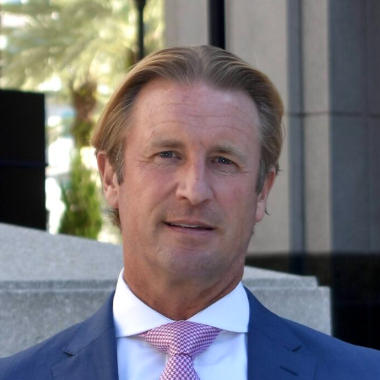
Legally Reviewed by Simon Wiseman, Founding Attorney, The Wiseman Law Firm — July 20, 2026
An arson charge in Orlando carries some of the harshest penalties in Florida’s criminal code. A first-degree arson conviction can mean up to 30 years in state prison, a permanent felony record that cannot be sealed or expunged, and consequences that reach into employment, professional licensing, housing, and civil liability for decades to come. If you or a family member is under investigation or has been arrested for arson anywhere in the greater Orlando area, retaining an experienced arson defense attorney before making any statement is the single most important step you can take.
At The Wiseman Law Firm, Attorney Simon Wiseman has defended clients against serious felony charges in Central Florida’s courts for more than 25 years — including prior service as a state prosecutor in Orange County before opening his defense practice. Arson prosecutions are built on fire science, the opinion testimony of investigators, and largely circumstantial evidence. Attorney Wiseman knows how each element of those cases is constructed and how to take them apart. For related charges, visit our full violent crimes defense practice area.

How Florida Defines Arson Under Statute 806.01
Arson in Florida is governed by Florida Statute 806.01, which defines the offense as the willful and unlawful damaging of a structure by fire or explosion. The statute also applies when a structure is damaged by fire during the commission of any other felony, meaning arson charges can accompany other serious criminal accusations even where fire was not the central element of the alleged conduct.
Florida prosecutors must establish two elements beyond a reasonable doubt in every arson case. First, that the fire was set willfully — intentionally rather than accidentally or through recklessness. Second, that the defendant was the person responsible. Both elements are challengeable. A fire caused by faulty wiring, a malfunctioning appliance, an unattended cooking source, a lightning strike, or discarded materials is not arson under Florida law, regardless of how investigators characterize it at the scene. Proving willfulness is the prosecution’s burden, and it is one that a prepared defense can contest.
If you have been arrested for arson in Orange County or charged anywhere in the Central Florida area, Attorney Wiseman can review the investigative file, assess the origin-and-cause determination, and begin building a defense from day one.
Degrees of Arson Charges in Florida
First-Degree Arson
A first-degree felony arson charge applies when the structure involved was a dwelling — occupied or unoccupied — or any structure where people are normally present, such as a hospital, school, church, jail, or business during operating hours. The charge also applies when the defendant knew or reasonably should have known the structure was occupied at the time of the fire. First-degree arson carries a maximum of 30 years in state prison and a $10,000 fine. Under Florida’s Criminal Punishment Code, first-degree arson is scored as a Level 7 offense, which generates a substantial minimum sentencing score even for a first-time offender. A conviction is a permanent first-degree felony that cannot be sealed or expunged under Florida law.
Second-Degree Arson
Second-degree arson covers any willful fire or explosion damage to a structure that does not fall within the first-degree definition — typically unoccupied outbuildings, storage sheds, fences, vehicles, or structures similar in nature. Second-degree arson is a second-degree felony, punishable by up to 15 years in state prison and a $10,000 fine. Importantly, ownership of the structure is not a defense. Setting fire to property you personally own can still be charged as arson — particularly when an insurance policy was in effect and investigators believe financial motive is present.
Arson Resulting in Injury or Death
Florida treats injuries and deaths resulting from arson as separate, additional charges on top of the underlying arson count. Under Florida Statute 806.031, arson causing bodily harm to a firefighter or any other person is a first-degree misdemeanor; arson causing great bodily harm, permanent disability, or permanent disfigurement is a second-degree felony punishable by up to 15 years in prison. The State does not need to prove the defendant intended to injure anyone — only that the injury resulted from the fire. If a person dies as a result of arson, the defendant may also face felony murder charges under Florida Statute 782.04, which is a capital offense punishable by life imprisonment without parole or by the death penalty.
⚠ Act Immediately — Your Words to Investigators Can Be Used Against You
Do not give any statement to fire marshals, ATF agents, or insurance investigators without first speaking with an attorney. Statements made at the scene, in a recorded interview, or in a sworn insurance proceeding can become the cornerstone of the prosecution’s case.
25+ years of criminal defense experience in Central Florida. Former Orange County state prosecutor. Free, confidential consultations — available 24 hours a day, 7 days a week, including weekends and holidays.
How Arson Cases Are Investigated in Orange County
Arson investigations are built differently than almost any other criminal case in Central Florida. By the time a suspect is identified, the fire scene has typically been destroyed by the fire itself, the water and chemical suppressants used to fight it, and the structural damage from the incident. What remains is reconstructed after the fact by investigators who draw conclusions about origin and cause from degraded physical evidence. In Orange County, arson investigations are led by the Orange County Fire Rescue arson unit or the Orlando Fire Department arson division, often with participation from the State Fire Marshal’s office and, in larger or federally connected cases, the Bureau of Alcohol, Tobacco, Firearms and Explosives (ATF).
Investigators use accelerant-detection dogs and gas chromatography laboratory analysis to look for chemical accelerants such as gasoline, acetone, or mineral spirits. They examine burn and char patterns to establish a claimed origin point, and they review financial records to develop a theory of motive — specifically, whether an insurance claim was pending, a mortgage was underwater, or a business was failing. Insurance companies conduct parallel investigations, and any information disclosed in a sworn examination under oath in an insurance proceeding can later be turned over to law enforcement and used against you in a criminal prosecution. Do not give any statement to any investigator — civil or criminal — without first speaking with an Orlando arson defense attorney.
What defense attorneys examine in an arson case:
|
Fire Investigation Reports Origin-and-cause opinions, burn-pattern analysis, and accelerant findings. The methodology used under NFPA 921 standards is a primary challenge point. |
Lab and K-9 Results Gas chromatography logs and accelerant-detection reports, reviewed for chain of custody, proper collection, and alternative explanations for chemical findings. |
|
Insurance Records and Claim Files Policy documentation, claim filings, and examination-under-oath transcripts used by the prosecution to establish alleged financial motive. |
Witness Statements and Digital Evidence Neighbor accounts, first-responder observations, recorded statements, cell phone records, and surveillance footage reviewed for timeline and placement. |
Consequences of an Arson Conviction in Florida
A felony arson conviction in Florida reaches far beyond the sentencing hearing. First-degree arson is scored as Level 7 under Florida’s Criminal Punishment Code, which means that even without any prior criminal history, a sentencing judge is required to impose a state prison term unless there are substantial and compelling grounds for a downward departure. That prison sentence is only the beginning. The conviction itself — a permanent first-degree felony — cannot be sealed or expunged under any circumstances. That record will appear on every background check, professional licensing application, and housing inquiry for the rest of your life.
Additional consequences of a Florida arson conviction can include: permanent loss of voting rights and the right to possess a firearm; ineligibility for professional licenses in real estate, healthcare, contracting, and similar fields; adverse immigration consequences for non-citizen defendants, including deportation eligibility; civil liability exposure to property owners, insurers, and injured parties; and significant collateral damage to employment and family stability. When arson charges are accompanied by insurance fraud allegations — which is common when a claim was made on the property — the charges compound. Attorney Wiseman handles fraud charges alongside arson defense as a routine part of complex criminal cases in Central Florida.
How an Orlando Arson Defense Attorney Can Help You
Arson prosecution in Florida is almost entirely dependent on expert opinion testimony. The State’s case typically rests on a fire investigator who concludes — sometimes weeks after the fire and from a partially destroyed scene — that the origin and cause point to intentional ignition. That conclusion is an opinion, not an established fact, and it can be wrong. Investigators who skip steps required by the National Fire Protection Association’s NFPA 921 Guide for Fire and Explosion Investigations, rely on discredited burn-pattern indicators, or fail to systematically eliminate alternative accidental causes can be challenged effectively by a qualified independent fire science expert.
Attorney Wiseman works with independent fire science professionals who can review the investigator’s methodology, examine the lab results, and offer alternative explanations for the burn evidence. Where the State’s case depends on a false elimination of accidental causes, a properly qualified expert can expose that gap. In many arson cases in Orange County, the State’s own investigative file contains information that, when read carefully, undermines the prosecution’s theory — and it is the defense attorney’s job to find it.
|
1
Free Consultation |
2
Full Case File Review |
3
Defense Strategy |
4
Resolution |
Common Defenses Against Florida Arson Charges
Every arson case in Orlando is fact-specific. The right defense strategy depends entirely on what the evidence actually shows, what the State’s investigation actually did, and where those two things diverge. Defenses that commonly arise in Florida arson cases include:
- Accidental origin: The fire was caused by faulty wiring, a malfunctioning appliance, an unattended cooking fire, a lightning strike, or another non-criminal source. When the evidence supports it, this is the most complete defense available — it eliminates the willfulness element the State must prove.
- Flawed origin-and-cause methodology: The State’s fire investigator relied on discredited indicators such as pour patterns, alligator charring, or low burn, skipped required documentation steps under NFPA 921, or failed to systematically eliminate accidental causes before concluding intentional ignition. An independent expert can expose these failures.
- Lack of willful intent: Even where a fire was intentionally set, the State must prove it was set with willful and unlawful intent. Where the evidence supports recklessness or negligence rather than deliberate intent, the defense may support a reduction to criminal mischief under Florida Statute 806.13 — which can be a misdemeanor depending on the amount of damage alleged.
- Insufficient connection to the defendant: In many arson cases, the only evidence linking the defendant to the fire is circumstantial — opportunity, motive, and proximity. When the State cannot establish beyond a reasonable doubt that the defendant actually set the fire, the identification standard has not been met.
- Constitutional violations: If investigators conducted a warrantless search of the fire scene after the emergency exception expired, interrogated a suspect in custody without Miranda warnings, or obtained a confession through coercion, suppression motions may exclude that evidence from trial. Fourth Amendment challenges are a routine part of arson defense when investigators exceed their authority.
- Insurance fraud theory not supported by evidence: When the prosecution’s entire motive theory rests on an alleged insurance fraud, Attorney Wiseman examines whether the policy actually covered the loss, whether a claim was actually made, and whether the financial pressure the State alleges is supported by the documentary record.
In cases where the evidence does not support a full dismissal, negotiating a charge reduction is often the most effective strategy. A reduction to criminal mischief or a lesser arson degree can significantly reduce prison exposure and, in some circumstances, preserve options that a felony conviction would permanently foreclose. View our case results for an overview of the types of matters handled by The Wiseman Law Firm.
What to Do If You Are Investigated or Charged With Arson in Orlando
The hours and days immediately following a fire are the most consequential period in any arson case. Three rules protect your legal position from the moment of investigation:
Rule 1 — Do Not Make Any Statement
Do not give any statement — written, verbal, or recorded — to fire marshals, ATF agents, Orlando Police Department detectives, Orange County sheriff’s investigators, insurance company representatives, or any other person investigating the fire. You have the right to remain silent. Politely decline any interview and contact an attorney. Statements made voluntarily at the scene, during a follow-up interview, or in an insurance examination under oath can all be turned over to law enforcement and used against you in a criminal prosecution.
Rule 2 — Do Not Consent to Any Search
Do not allow investigators to search the fire scene, your home, your vehicle, your phone, your financial accounts, or any other property without a valid search warrant. Fire investigators frequently request consent because they do not yet have probable cause to obtain a warrant. Your Fourth Amendment rights do not disappear because a fire occurred. If investigators had sufficient evidence for a warrant, they would not need your consent.
Rule 3 — Contact Attorney Wiseman Immediately
Early engagement allows the defense to begin gathering evidence before it degrades further, engage an independent fire expert before the State’s investigation closes, and protect your rights in any parallel insurance proceeding before statements are made that cannot be withdrawn. Call (407) 420-4647 at any time — Attorney Wiseman is available 24 hours a day, seven days a week, including nights and weekends. The earlier you call, the more options exist to protect your case.
|
25+
Years of Criminal Defense Experience in Central Florida |
Former Prosecutor
Orange County State Attorney’s Office — Knows How Arson Cases Are Built |
24/7
Available After an Arrest — Nights, Weekends, and Holidays |
Frequently Asked Questions About Florida Arson Charges
Free, Confidential Consultation — No Obligation to Retain
Charged With Arson in Orlando? Call Now.
Former Orange County state prosecutor. 25+ years of criminal defense experience in Central Florida’s courts.
Attorney Simon Wiseman handles arson cases across Orange, Osceola, Seminole, and Lake counties — and is available around the clock after an arrest.
Or call (407) 420-4647 — available 24 hours a day, 7 days a week, including weekends and holidays
Legally Reviewed by Simon Wiseman, Founding Attorney, The Wiseman Law Firm — July 20, 2026