

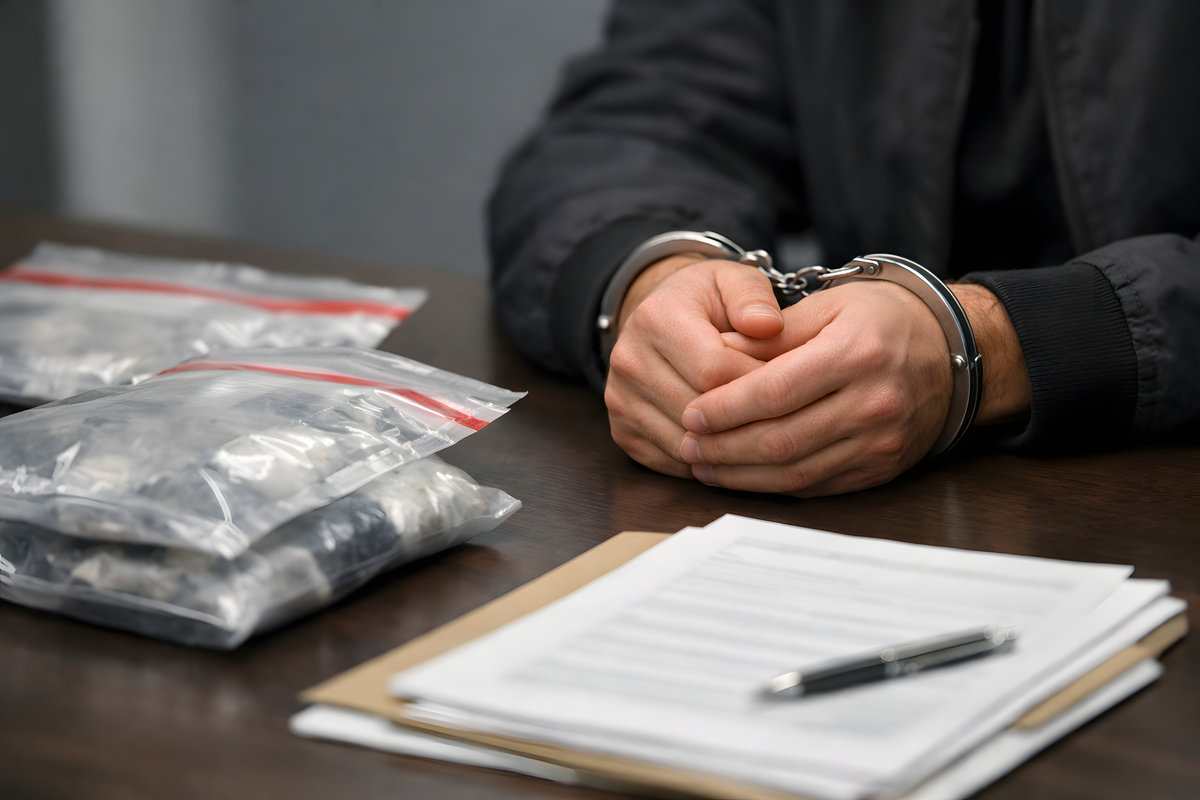
 Transporting controlled substances from one state to another transforms a relatively straightforward state-level drug charge into a far more complex federal prosecution. Federal drug trafficking charges bring significantly harsher penalties than state offenses, and the moment drugs cross state boundaries, federal law enforcement agencies like the Drug Enforcement Administration and the FBI can assume jurisdiction over your case.
At The Wiseman Law Firm, Attorney Simon Wiseman draws on over 23 years of criminal defense experience, including his time as a former prosecutor in Orange County, to defend clients facing interstate drug trafficking allegations. His unique prosecutorial insight allows him to anticipate federal strategies and build comprehensive defenses against these serious charges.
When Does Drug Trafficking Become a Federal Offense?
Interstate drug trafficking automatically triggers federal jurisdiction under 21 U.S.C. § 841. Understanding drug crimes becomes crucial when facing federal charges, as any transportation of controlled substances across state lines falls under federal law, even if the quantity seems relatively small.
Federal charges differ fundamentally from state prosecutions in several key respects. Federal courts impose mandatory minimum sentences for specific drug quantities, federal penalties typically exceed state-level punishments for comparable offenses, and federal investigations involve sophisticated surveillance techniques and multi-agency task forces. Common scenarios triggering federal jurisdiction include shipping drugs through postal services or private carriers, transporting controlled substances across state borders in vehicles, coordinating drug distribution networks spanning multiple states, and using interstate commerce infrastructure for drug operations.
Federal Penalties and Investigation Methods
Federal sentencing for interstate drug trafficking depends primarily on drug type and quantity. Under federal law, trafficking 500 grams or more of cocaine triggers a five-year mandatory minimum sentence, while trafficking 5 kilograms or more carries a ten-year mandatory minimum. Beyond incarceration, federal convictions carry substantial fines reaching up to $5 million for individuals or $25 million for organizations.
Federal drug investigations employ sophisticated techniques rarely seen in state prosecutions. Multi-agency task forces coordinate surveillance across jurisdictions, pooling resources from the DEA, FBI, Homeland Security, and local agencies. Wiretaps and electronic surveillance form the backbone of many federal cases, with investigators obtaining court orders to monitor phone calls, text messages, and emails discussing drug transactions.
Defending Against Federal Charges
Successfully defending federal drug trafficking charges requires challenging both the substantive evidence and procedural aspects of the investigation. Constitutional violations during the investigation can provide powerful defense strategies, as the Fourth Amendment protects against unreasonable searches and seizures. Illegal search and seizure frequently occurs during traffic stops or package inspections.
If officers lacked probable cause for a traffic stop, any drugs discovered during the stop would be inadmissible. When law enforcement exceeds the scope of search warrants or conducts warrantless searches without valid exceptions, defense attorneys can exclude all resulting evidence. Lack of knowledge or possession provides another viable defense strategy, as federal prosecutors must prove beyond a reasonable doubt that you knew about the drugs and exercised control over them. Challenging drug quantity measurements can significantly reduce potential sentences given the quantity-based federal sentencing structure.
The Federal Criminal Process
Federal drug prosecutions follow distinct procedures compared to state crimes. Following an arrest, defendants appear before a federal magistrate judge for an initial appearance, typically within 24 hours. The magistrate advises defendants of charges and appoints counsel if needed. Grand jury proceedings occur in federal cases rather than preliminary hearings, with federal prosecutors presenting evidence to grand juries to determine whether probable cause exists to indict.
Discovery in federal cases involves extensive document production, with prosecutors required to disclose evidence favorable to the defense. Plea negotiations occur in the vast majority of federal drug cases, with federal sentencing guidelines providing structure for plea bargaining. Federal juries consist of twelve members rather than six, require unanimous verdicts, and follow federal rules of evidence.
Collateral Consequences Beyond Prison
Federal drug convictions carry lifelong consequences extending far beyond incarceration. Immigration implications prove severe for non-citizens, as drug trafficking convictions qualify as aggravated felonies under immigration law, triggering mandatory deportation with no relief available. Employment prospects diminish significantly following federal drug convictions, as professional licenses become unattainable in many fields and background checks reveal federal convictions indefinitely.
Housing restrictions limit options for convicted individuals, with public housing authorities able to deny applications based on drug convictions. Financial aid for education disappears, as federal student loans and grants become unavailable following drug trafficking convictions. Gun rights face permanent elimination, with federal law prohibiting firearm possession for anyone convicted of crimes punishable by more than one year imprisonment.
Contact The Wiseman Law Firm for Federal Drug Trafficking Defense
Federal drug trafficking charges demand immediate, aggressive legal representation from attorneys experienced in federal criminal defense. The Wiseman Law Firm has successfully defended clients against serious charges throughout Central Florida. Attorney Simon Wiseman’s background as a former prosecutor in Orange County provides invaluable insight into how federal agencies build cases and what strategies effectively counter their evidence. His trial experience includes handling complex cases involving RICO charges, murder, and drug trafficking, giving him the courtroom skills necessary to fight for favorable outcomes even in the most challenging circumstances.
Our firm provides 24-hour availability because we understand federal arrests can happen at any time. Whether you face investigation, charges, or trial, The Wiseman Law Firm offers the personalized attention and aggressive advocacy your case demands. Don’t navigate the federal criminal justice system alone—contact us today to schedule a consultation and learn how we can protect your rights and future.